
Struggle on the Eastern, Southern, and Western Fronts
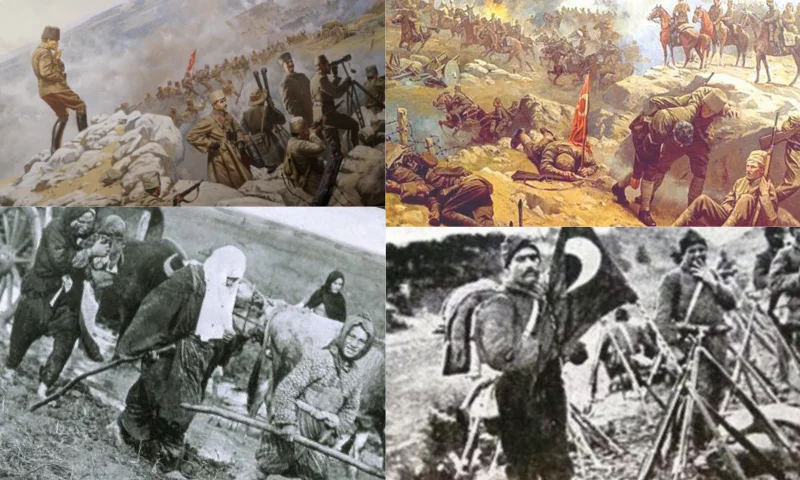
Kazım Karabekir fought against the Armenians and the French on the eastern front, succeeding in expelling the Armenian forces from Eastern Anatolia. After driving the Armenians out of the country, the Treaty of Gümrü was signed. The Treaty of Gümrü, signed on December 3, 1920, led to an understanding with both the Armenians and the Soviets. Gaining the support of the Soviets was crucial for the Grand National Assembly of Turkey (TBMM). Meanwhile, during the Turkish War of Independence, various aid arrived at the TBMM from brotherly nations such as Pakistan, India, Iran, and Azerbaijan. It is known that Turkish mothers in Azerbaijan sent their bangles to Anatolia. The Turkish army, with the support of the brotherly nations, fought the enemy more powerfully. Beyond the Eastern Front, the Southern Fronts also witnessed great resistance. On the Southern Front, the Kuvayi Milliye forces fought against the French. The Kuvayi Milliye forces are the great contributors to our successes on the Southern Front. The French occupied Maraş and Urfa on October 30, 1919, and Antep on November 5, 1919. Antep was initially occupied by the British and then left under French control. All this while, Sultan Vahdettin, despite all pressure and coercion, did not leave Istanbul and ensured the city remained in Turkish hands. On the Southern Front, the French army, realizing they could not contend with the Kuvayi Milliye forces, withdrew from the cities they had occupied one by one. In this regard, the Ankara Agreement was signed with the French on October 21, 1921. This brought an end to the French occupation. The cities of Urfa, Maraş, and Antep, which showed great resistance during the French occupation, were awarded titles such as "Heroic," "Veteran," and "Glorious" after the declaration of the Republic.
The Final Years of the War of Independence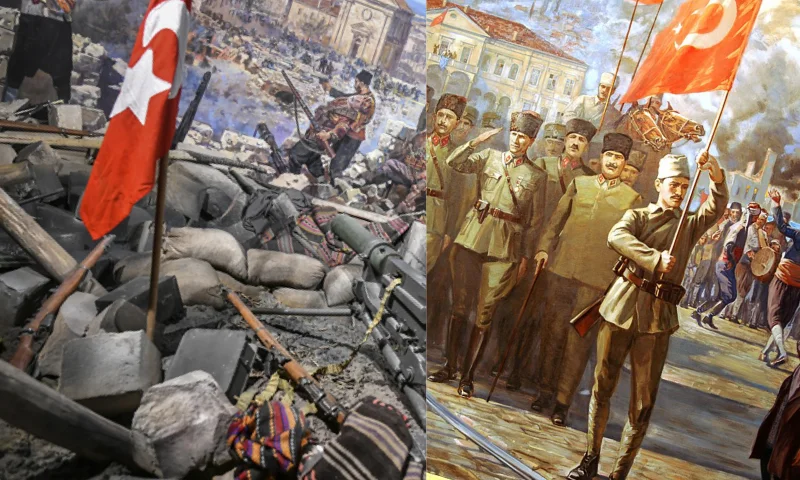
The withdrawal of the French in a short period of about 2 years had frightened the Italians. The Italian Forces had considered İzmir their territory since the beginning of the occupation. Unable to obtain İzmir and disagreeing with their allies, the Italians landed in Antalya on March 28, 1919. Unable to advance as expected in Antalya and surrounding provinces, and fearing a rout by the Turkish armies, the Italians withdrew on July 5, 1921. Thus, the Eastern, Southern, and Southwestern Anatolian fronts of the War of Independence were resolved. After these fronts were resolved, it was time for the greatest resistance. The Greeks, advancing in Western Anatolia with the support of the British since the beginning of the war, had now reached the borders of Ankara. The occupation of Ankara by the Greeks would mean the loss of the War of Independence. Therefore, some members of the Assembly advocated for the relocation of the Assembly to Kayseri. However, the majority of the assembly members opposed this idea. In this direction, the foundations for great resistance against the Greeks began to be laid. The aim of the TBMM under these circumstances was to act as if the war was over. The Turkish armies pretended to return to their normal lives, putting the war aside, to prepare for 1 year. No military operations were organized for 1 year, and the public was directed towards activities like football and dancing as if they had returned to normal life. This made the enemy think that the Turks were unprepared. However, during this period, the Turkish armies received aid from abroad and directed it to various fronts. Once everything was ready, resistance began against the Greeks, who were under British support. The Turkish armies fought against the Greeks on the Western front in battles such as the First İnönü, Second İnönü, the Battle of Sakarya, and the Great Offensive. The majority of the victories won on the Western Front are the work of the Commander of the Western Front, İsmet Pasha. A large number of these battles resulted in victories for the regular army units. The Great Offensive, the largest of these battles, in which Mustafa Kemal himself participated, concluded with a Turkish victory on September 9, 1922. The Turkish armies entered İzmir, bringing the military phase of the War of Independence to an end.
The Political Front of the War of Independence
With the Great Offensive operation pushing the enemy into the sea, the next objective of the Turkish army was to take Eastern Thrace and Istanbul. However, no operation was organized for these regions. The British, realizing that the Turkish armies would no longer back down and would not abandon the war without taking Istanbul, were forced to leave Istanbul. This brought the military phase of the war to a complete end. After the War of Independence ended, a final peace treaty with the Allied Powers was necessary. The aim of the Allied Powers in this matter was to portray the War of Independence as a rebellion and to act as the victor of the war. However, they failed to achieve this. The TBMM sent İsmet Pasha to Lausanne to negotiate with the enemy. İsmet Pasha held numerous meetings with the Allied Powers in Lausanne. Neither side fully obtained what it wanted from the negotiations. The Allied Powers had to abandon capitulations and their privileges in the straits. Turkey, on the other hand, had to abandon its dreams of the National Pact. Consequently, the agreement was signed on July 24, 1923.