What is Industry 4.0?
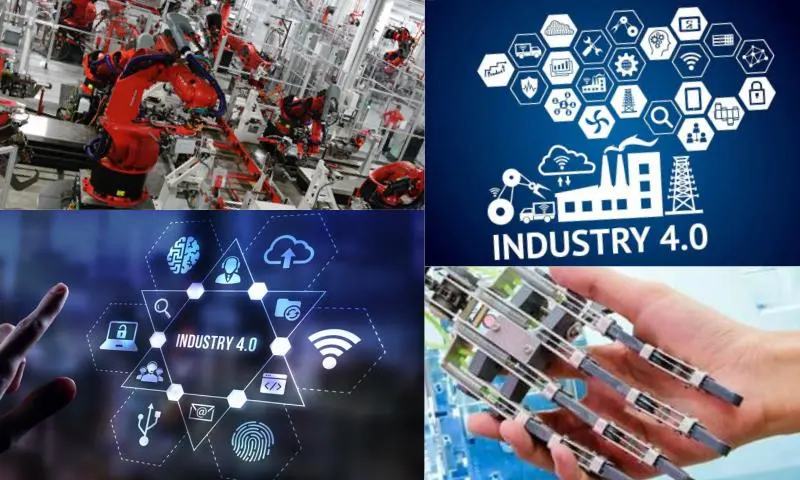
Industry 4.0 refers to the fourth stage of the industrial revolution and symbolizes an era shaped by the integration of digitalization, automation, and smart technologies into production processes. Industry 4.0 represents a production system supported by the Internet of Things (IoT), artificial intelligence (AI), robotics, data analytics, and other digital technologies that enable machines on the production line to communicate with each other and with humans in real-time. In this new era, the boundaries between the physical and digital worlds are increasingly blurring. One of the main goals of Industry 4.0 is to make production processes more efficient, reduce costs, improve product quality, and provide flexibility to respond quickly to demand. You can look at relevant online companies on internet pages to get information on this subject and ask your questions, and examine them in detail from here.
Components and Technological Tools of Industry 4.0
The core components of Industry 4.0 include the Internet of Things (IoT), artificial intelligence (AI), big data, robotics, 3D printing, cyber-physical systems, and cloud computing. IoT allows machines to communicate with each other and for data to be analyzed on a central platform. This enables machines to perform self-maintenance, issue pre-failure warnings, and optimize the production process. Artificial intelligence and data analytics are used to process the collected data and make production processes more efficient. These technologies minimize human errors, increase production speed, and make decision-making processes faster and more accurate. Furthermore, with robotic technology, labor requirements can be reduced, and more precise and faster production can be achieved. These technologies enable the creation of flexible production systems and the efficient execution of small-scale production.
Advantages and Challenges of Industry 4.0
One of the biggest advantages brought by Industry 4.0 is that production processes become more efficient, flexible, and error-free. While production speed increases, costs are also reduced. Additionally, it becomes possible to produce more personalized products and respond quickly to customer demands. This allows supply chains to operate more efficiently, and companies gain a greater competitive advantage by shortening production times. However, the transition to Industry 4.0 also presents some challenges. One of the biggest challenges is that the integration of new technologies can be complex and costly. Furthermore, this revolutionary transformation can have a significant impact on the labor force. In particular, workers lacking digital skills may face difficulties during this transformation process. Therefore, great importance must be given to the training and restructuring of the workforce. Additionally, issues such as data security and cybersecurity are other important factors that need attention. Industry 4.0 is creating revolutionary changes in the manufacturing sector and offering significant opportunities to businesses. Digitalization, automation, and smart technologies are making production processes more efficient, reducing costs, and increasing production quality. However, this transformation process also involves challenges and risks. Successful Industry 4.0 integration requires proper training of the workforce, effective use of new technologies, and implementation of security measures. In the future, the impact of Industry 4.0 will lead to a more sustainable, flexible, and efficient manufacturing sector.