Marble Usage From Ancient Times to the Present
Marmara marbles are products obtained by subjecting calcite and dolomite granules to high temperature and pressure, followed by recrystallization. Today, special productions are made by our country, both domestically and internationally, with what has become known as
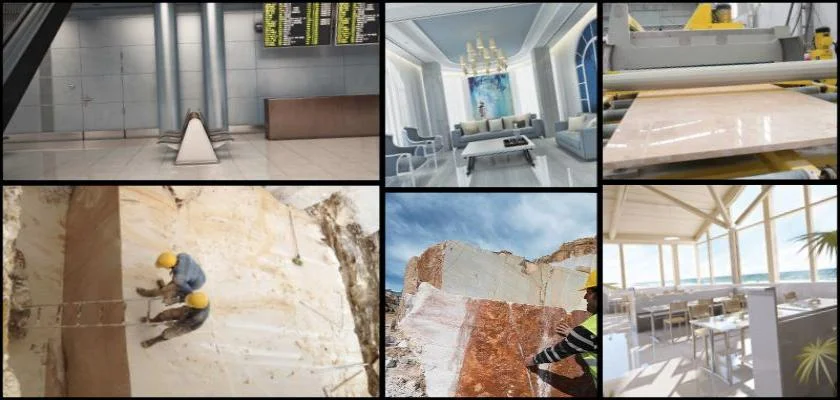
Marmara marble. The heat and pressure transformation process applied during its formation distinguishes marble from limestone, a sedimentary rock. As a result of these processes, metamorphic processes transform the structures of sedimentary carbonate crystals into interlocking carbonate crystals, yielding marble rocks. In ancient times, the Greeks, Romans, and Ottomans decorated their mosques, palaces, temples, sculptures, and cathedrals with marble and marble decorations. The most common and widespread uses of all marble models and products, including Marmara marble, both in the past and present, are for floor paving and wall cladding. The warm and elegant appearance of marble has led to its use in the decoration of corridors and foyers. While light-colored marble models are more frequently used for floor paving, colored marbles are often decorated with patterns and mosaics to create a dramatic effect in the areas where they are used.
What are Surface Treatments on Marble and How Are They Done?
Marble has been used in all desired areas since ancient times due to its chic, elegant appearance and its ability to provide spaciousness. Today, the most preferred Marmara marble comes in slabs and tiles with either a polished or honed surface treatment. While polished surfaces provide a spectacular appearance, they are quite slippery on wet floors. For this reason, honed marble surfaces are preferred for wet areas.