
Fundamental Concepts and Importance of Information Software

Information software is a fundamental component of information technologies and computer sciences. It involves the creation and management of computer programs, applications, and systems. Software provides the necessary instructions for computer hardware to perform specific tasks. In this context, the software development process includes planning, design, coding, testing, and maintenance phases. Information software enables individuals, businesses, and organizations to operate efficiently, automates business processes, and enhances problem-solving capabilities. It has a wide range of applications, from database management systems to operating systems, and from desktop applications to mobile applications. Software forms the basis of technological innovations and digital transformation, thus playing a critical role in the modern business world and daily life. For information on this topic and to ask your questions, you can look at relevant online companies on web pages and examine them in detail from here.
Software Development Process and Methodologies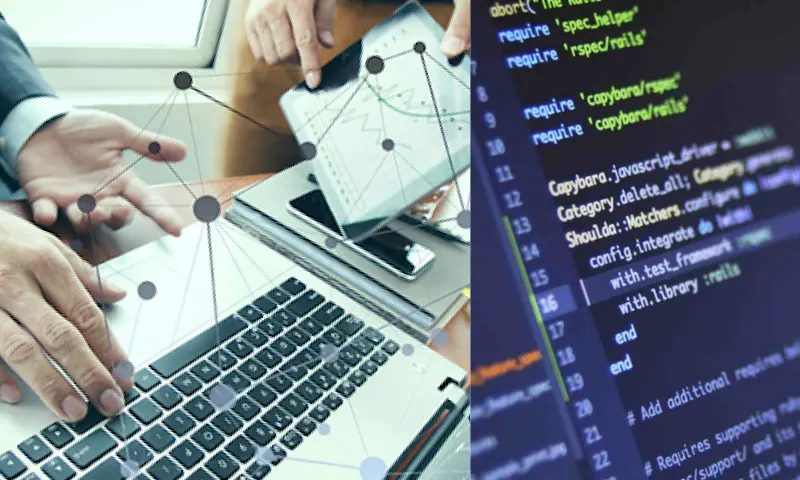
The software development process includes the planning, design, coding, testing, and maintenance of software. This process is carried out through various methodologies. One of the most commonly used methodologies is the "Waterfall Model," where each phase is completed sequentially. The Waterfall Model ensures that the work done in each phase of the project is clearly defined. However, in today's software development world, more flexible and iterative approaches like "Agile" and "Scrum" methodologies are also very popular. Agile aims for rapid software development with continuous feedback and improvement. Scrum is an implementation of the Agile method and organizes project progress by working in specific time frames (sprints). Both methodologies aim to adapt to changing requirements and achieve fast deliveries. The software development process is continuously improved through these methodologies to enhance the quality and effectiveness of the software.
The Future of Software and Technological Trends
The future of information software is being shaped by rapidly evolving technological trends. Artificial intelligence (AI) and machine learning (ML) are revolutionizing data analysis, automation, and personalization by making software applications smarter and more predictive. The Internet of Things (IoT) enables various devices to connect with each other and with central systems over the internet, offering smarter home systems, healthcare applications, and industrial solutions. Furthermore, cloud computing makes software accessible over the internet, providing flexibility and scalability in data storage, processing, and sharing. Software security is also a significant focus; with the increasing cyber security threats, ensuring software security, protecting user data, and enhancing system security have become critical. These trends will determine how information software will evolve in the future and how it will adapt to technological changes.